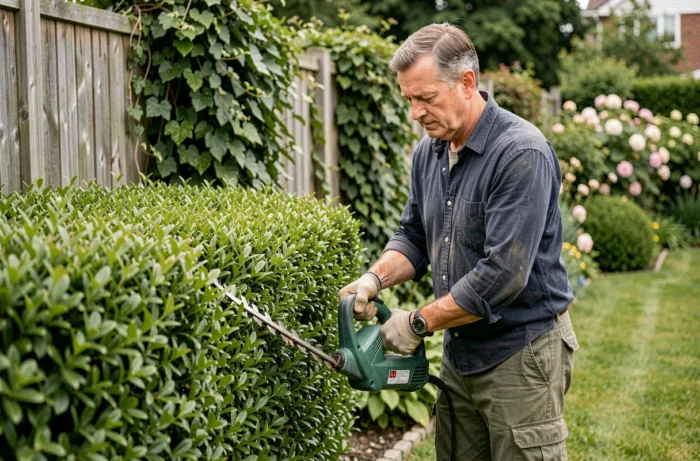
Between a budget corded model and a high-end petrol hedge trimmer, the price difference can be as much as 20 to 1. Choosing a hedge trimmer comes down to three measurable factors: tooth spacing, blade length and tool weight. Matching these specifications to the type of hedge you need to maintain helps you avoid buying a tool that is over- or, worse, underpowered for the job.
Tooth spacing, blade length and weight: a comparison to help you choose a hedge trimmer
Manufacturers’ specifications tend to highlight motor power. It matters, but it often obscures the two criteria that really determine cutting quality: tooth spacing and blade length.
| Type of hedge | Recommended tooth spacing | Suitable blade length | Recommended power source |
|---|---|---|---|
| Small hedge or topiary | Narrow (under 20 mm) | Short blade (around 20 cm) | Corded electric or battery-powered |
| Medium hedge, common shrubs | Medium (20 to 30 mm) | Mid-length blade (40 to 50 cm) | Li-ion battery or corded electric |
| Old, dense, long hedge | Wide (over 30 mm) | Long blade (60 cm or more) | Petrol or high-capacity battery |
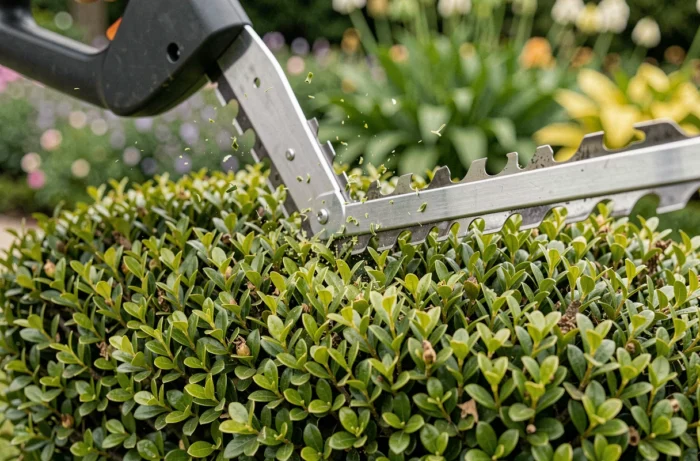
Wide tooth spacing can handle thicker branches, but the results will be less precise on a small box hedge. Conversely, a short blade with closely spaced teeth delivers a precise cut on ornamental shrubs, but will struggle with a privet hedge that has been growing for several years.
The range available at taille-haie-warrior.com illustrates the variety of configurations, from short blades for topiary to long-bladed models for country hedges.
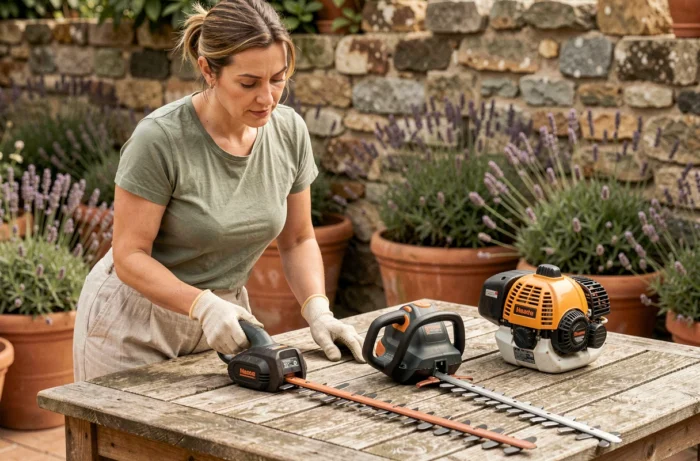
Battery, corded or petrol: how the power source really affects use
The power source is about more than just mobility. It affects weight, noise levels and continuous run time—all three directly contribute to gardener fatigue.
Battery hedge trimmers: runtime versus weight
Cordless lithium-ion models are the most common compromise for a medium-sized garden. Runtime depends on battery capacity, and a second charged battery solves most limitations.
Weight, however, is something to keep an eye on: the battery adds significant weight to the tool. During a trimming session lasting an hour or more, with your arms raised to hedge height, you’ll feel every extra hundred grams.
Corded hedge trimmers: lightweight but restrictive
Corded models are the lightest of all, as they have neither a battery nor a fuel tank. If your hedge is within about 30 metres of an outlet, this option offers a real advantage in terms of muscle strain. However, the cord means you’ll need an extension lead, which restricts movement when working at height.
Petrol hedge trimmers: power and noise
A petrol engine is the best choice for a long, old and dense hedge. Its power lets you cut through thick branches without straining. But petrol models are significantly louder than electric ones, which brings us to a factor that is often overlooked.
Noise regulations and biodiversity: two factors that affect when you can trim
Permitted hours for noisy gardening tools are set by local or regional regulations. Before buying a petrol hedge trimmer, check your local noise rules to avoid disputes with neighbours, especially in residential developments. A quieter battery-powered model may be a strategic choice in densely populated areas.
The trimming calendar is also shaped by biodiversity. The LPO recommends avoiding hedge trimming from 16 March to 31 August, during the bird nesting season. This recommendation applies to all gardeners, even though the formal ban (linked to CAP cross-compliance requirements) primarily concerns farmers.
- Before trimming between March and August, inspect the hedge for any active nests
- Where possible, trim in late summer or autumn, once birds have left the hedge
- Delay trimming a hedge laden with berries: they feed local wildlife, and removing them impoverishes the garden ecosystem
Hedge trimmer ergonomics and safety: details that make a trimming session easier
The weight listed on the product page only tells part of the story. Weight distribution, a rotating handle and the tool’s overall balance determine how tired you feel after half an hour of working with your arms raised.
A hedge trimmer with a rotating handle lets you trim the top of the hedge without twisting your wrists. This feature, absent from entry-level models, makes a difference when trimming hedges above shoulder height. For very tall hedges, a pole-mounted (telescopic) model avoids the need for a stepladder, a common cause of falls.
For safety, almost all modern hedge trimmers have a dual-switch system that stops the motor as soon as you release your grip with either hand. Before buying, also check for a hand guard and a blade cover for storage.
- Wear cut-resistant gloves, safety glasses and hearing protection (especially with a petrol model)
- Work in a sweeping arc, from bottom to top, clearing away cut branches as you go
- Sharpen the blades, or have them sharpened, once a season to maintain a clean cut without straining the motor
A hedge trimmer suited to both your hedge and your build turns a chore into a quick task. The choice depends less on the brand than on how well tooth spacing, blade length and the type of vegetation you need to maintain match up.