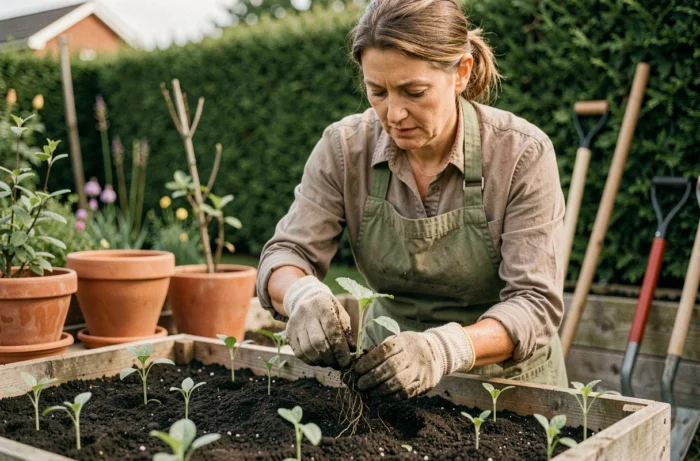
A productive garden in bloom twelve months a year starts with planning around the water available. Watering restrictions are no longer limited to the summer months: in Loire-Atlantique, measures were extended until November 30 despite expected rainfall, with different rules depending on the river basin and type of crop.
In some areas, vegetable gardens could be watered at night, while ornamental beds remained subject to stricter bans. Smart gardening starts with understanding these regulations.
Water restrictions and balancing vegetable gardens, ornamental plants and biodiversity
The VigiEau platform replaces any fixed watering schedule. Restriction thresholds vary from one department to another, and sometimes from one river basin to another within the same department. Checking this resource before each watering session helps you avoid violations and adjust your priorities.
When water is scarce, we recommend dividing the garden into three distinct zones. Mulched vegetable beds come first: leafy vegetables and tomatoes do not tolerate prolonged water stress well. Ornamental plants come second, especially water-hungry annuals. The third zone, dedicated to biodiversity, needs almost no watering if it is planted with locally native species.
Practical guides and growing calendars tailored to this approach are available at https://www.conseil-jardin.net, which details plant combinations by season and soil type.
In Creuse, the easing of restrictions observed in November 2026 came with a reminder: groundwater reserves had not yet been significantly replenished. Saving water remains worthwhile even after a rainy spell. A sufficiently thick layer of organic mulch (dead leaves, shredded branches or cereal straw) noticeably reduces soil evaporation, whatever the season.
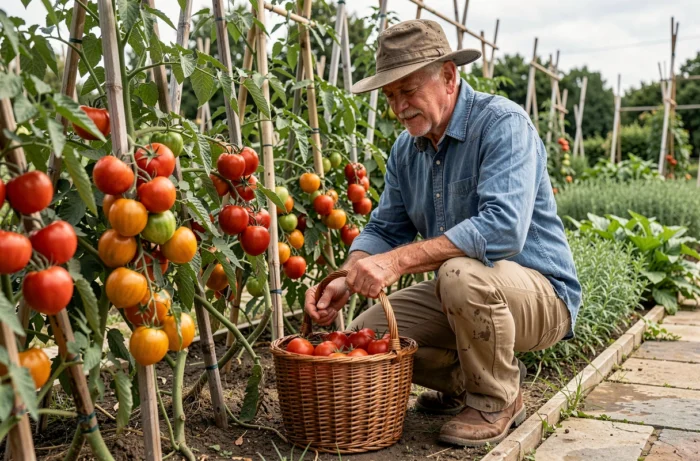
Living soil and fertility: the foundation of a garden that thrives all year
Well-structured soil absorbs and retains rainwater better than compacted soil, reducing the need for watering. The key is not to keep adding more fertilizer, but to nourish the microbial life already present.
Keep the soil covered at all times
Bare soil is soil that is deteriorating. Between vegetable crops, sow a green manure crop (mustard, phacelia or crimson clover) to protect soil structure, fix atmospheric nitrogen for legumes and prevent nutrients from being washed away by autumn and winter rains.
In the depths of winter, a layer of shredded dead leaves acts as thermal insulation for soil microorganisms. In spring, this partially decomposed material turns into humus that roots can readily absorb.
Surface composting instead of digging it in
Leaving crop residues directly on the beds without digging them in mimics the natural cycle of forest leaf litter. Earthworms and decomposer fungi work at the surface, and turning the soil disrupts this network. A light surface raking is all that is needed before the next sowing.
Plant protection regulations: what home gardeners can still use
Articles aimed at home gardeners often claim that all pesticides are banned for private individuals. The reality is more nuanced. Regulations on plant protection products have evolved through key milestones in 2019 and 2022, with increasingly strict restrictions but also exceptions for certain product categories.
- Biocontrol products (beneficial macro-organisms, pheromones and preparations based on microorganisms) can still be used by amateur gardeners without any specific restrictions.
- Basic substances, such as white vinegar or baking soda, are approved for specific plant protection uses and are available from garden centers.
- Low-risk natural preparations (PNPP), including nettle tea, may be made and used by private individuals.
Knowing the difference between these three categories makes it possible to tackle fungal or pest problems without breaking the law or resorting to ineffective methods. A garden that thrives all year calls for realistic plant health management, not giving up on all intervention.
Garden zoning for biodiversity without sacrificing aesthetics
The MNHN, OFB and INRAE recommend leaving an area unmown in spring and prioritizing locally native plants. This does not mean turning the entire garden into a wild patch.
The most effective approach is to divide the same space into three distinct management zones:
- A grassy strip along the edge of the property, cut once or twice a year, serving as an ecological corridor for pollinators and beneficial insects in the vegetable garden.
- A pile of dead wood or stones in a discreet corner, providing shelter for hedgehogs, ground beetles and rove beetles, which naturally help control slug populations.
- Beds of native perennials (yarrow, meadow sage and knapweed) that flower in succession from spring to autumn and need very little water once established.
This zoning does not compromise the garden’s appearance. Well-chosen native plants can flower for just as long as horticultural varieties, while also attracting specialist pollinators that double-flowered cultivars do not feed.
A growing calendar suited to mild French winters
Under a cold frame or fleece, lamb’s lettuce, spinach and Cuban claytonia can be sown from September and will produce crops throughout winter in most regions of France. Broad beans sown in November germinate slowly and yield an early harvest in April, well before summer vegetables.
For ornamental planting, hellebores, winter heathers and snowdrops provide flowers from December to March. Paired with evergreen grasses (carex, stipa), they maintain visual structure even when the vegetable garden is dormant.
A garden that thrives all year depends on carefully staggered flowering and harvest times, not on growing ever more species. Four or five varieties timed to the local calendar can cover all twelve months without creating an unmanageable maintenance burden.