
Your phone unlocks with your face. Your scooter’s battery stores its own history. The online store you’re browsing adjusts its prices in real time. These unusual technological innovations work in the background, without instructions or fanfare, yet they’re transforming everyday life for millions of people.
Passwordless authentication: the invisible technology replacing your login credentials
Have you noticed that some services no longer ask you to enter a password? This quiet change has a technical name: passkeys. The idea is simple. Instead of memorizing a string of characters, your device confirms your identity using a fingerprint, facial recognition, or a local PIN.
According to the FIDO Alliance’s Passkey Index, published in October 2026, passkeys account for more than a third of successful sign-ins across participating services, up from around a quarter in 2025. Adoption is growing rapidly, and most users aren’t even aware they’ve switched authentication methods.
Several topics related to these discreet technologies are regularly explored in Question insolite’s tech section, which takes a closer look at innovations that have gone unnoticed.
The practical benefits are twofold. First, security improves: a password can be stolen through phishing, but not a cryptographic key stored on your device. Second, there’s less friction. No more resetting a forgotten password or juggling a password manager and an SMS verification code.
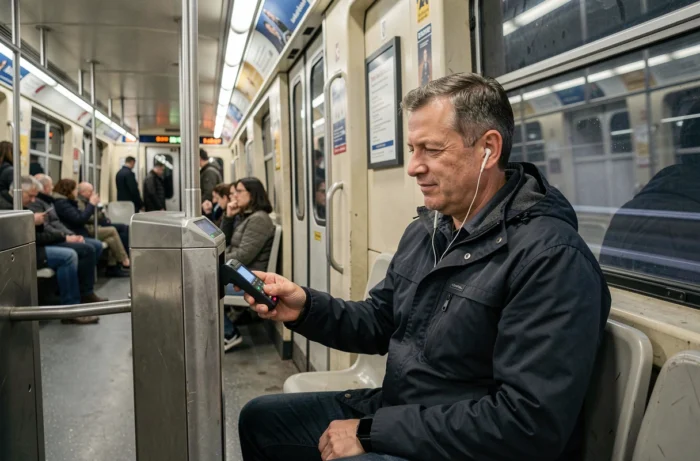
Digital battery passports: tracking technology from production to recycling
When you buy an electric bike or scooter, its battery has a history. The origin of its materials, its initial capacity, and the charge cycles it has already completed. This data exists, but until now it has remained locked away in manufacturers’ systems.
The European Batteries Regulation is changing that. From February 18, 2027, certain batteries will need a digital passport. This applies to electric vehicle batteries, batteries for light means of transport, and industrial batteries with a capacity of more than 2 kWh.
The passport is intended to make repair, reuse, and recycling easier. A repair technician will be able to check a battery’s state of health before working on it. A second-hand buyer will be able to verify its remaining capacity. A sorting facility will be able to identify its chemical composition and determine how it should be processed.
A phased rollout by product category, not a big bang
Digital product passports won’t be a universal QR code rolled out all at once. Requirements are being introduced by product category and through specific legislation. The ESPR provides for a gradual rollout. For electronic products such as ICT devices, measures are being considered for 2029.
This piecemeal approach has a direct consequence: traceability will advance at different speeds depending on the items you use. Your bike battery will be documented before your smartphone.
Artificial intelligence built into everyday services: what the AI Act means for daily life
AI isn’t limited to flashy chatbots. It sorts your emails, corrects your texts, suggests the fastest route, and adjusts your screen brightness. These features work so seamlessly that it’s easy to forget an algorithm is behind them.
The European AI Act introduces obligations on a phased timeline. These include labeling certain content generated by artificial intelligence. In some cases, text, images, or audio produced by AI will need to include information identifying its origin.
For everyday users, this could mean that an AI-edited photo on social media soon displays a label. An automatic summary in your inbox might indicate that it was generated by an algorithm. The change is subtle, but it shifts the boundary between what you perceive as human and what isn’t.
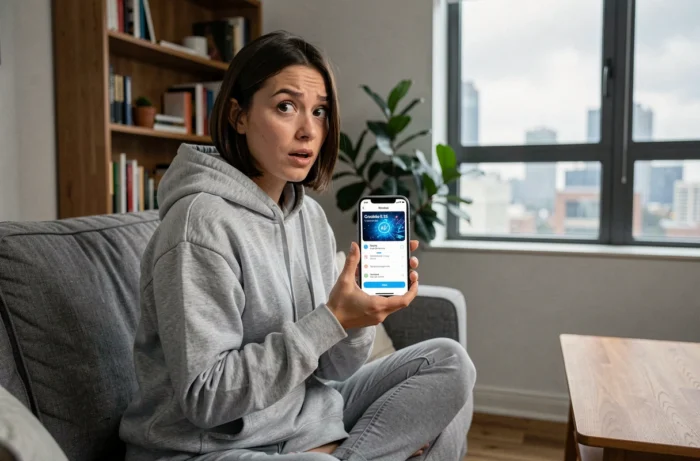
Invisible data and user control: who’s really in charge?
Passkeys, digital passports, built-in AI. These three innovations share a common thread that goes beyond technical prowess: they all generate data about you or your belongings.
The question is a practical one. Can you view the information stored by your scooter’s battery? Can you request a correction to inaccurate data in a biometric authentication system? Consumers don’t yet have a single, unified channel for exercising this control.
The Batteries Regulation provides for access to digital passport data, but the practical arrangements remain to be defined for each product category. The AI Act requires transparency, but the level of detail provided will depend on the implementing rules.
Here are some questions to ask about an invisible technology:
- What data does this technology collect about me or my device, and where is it stored?
- Is there a practical way for me to view, export, or correct this data?
- Does a regulatory framework already require the manufacturer or service provider to be transparent?
These habits don’t require any technical expertise. They simply help you regain a sense of control over systems designed to operate without human intervention.
Transparency as the next technology standard
European regulation, from the AI Act to digital passports and the ESPR, points in the same direction. Technologies that operate silently will gradually have to account for themselves. Not through unreadable manuals, but with information that’s accessible when you buy, use, or resell a product.
The most transformative innovations are the ones you can’t see at work. That’s precisely why they need a framework that makes them understandable. The next time your phone signs you in without a password, you’ll know that a global standard, a cryptographic key, and a European regulation are working together, silently, to make the process as simple as looking at your screen.