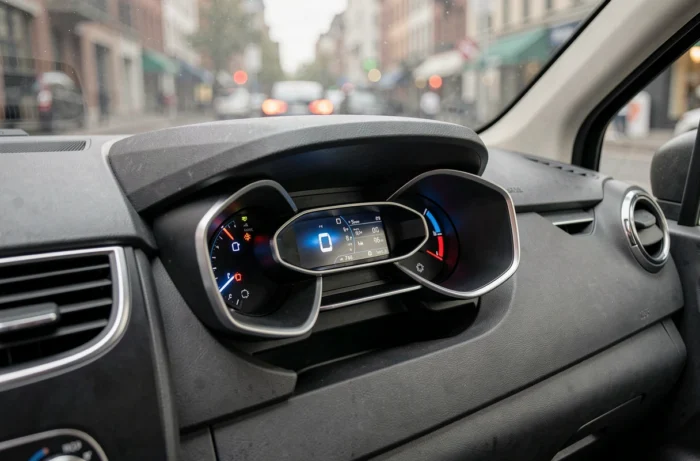
On the Clio 4, a blue warning light on the dashboard does not always indicate the same thing. Depending on the vehicle’s version and year, blue may refer to the high-beam indicator or the thermometer icon, which means the engine has not yet reached its operating temperature. The symbol matters more than the color alone, and the owner’s manual for each model remains the definitive reference.
High beams or engine temperature: identify the right icon on the Clio 4
It is easy to confuse the two because both warning lights are blue. The high-beam indicator looks like a stylized headlight with horizontal rays. The engine temperature indicator shows a thermometer immersed in liquid.
When the blue warning light on the Clio 4 comes on at startup and then goes out after a few minutes of driving, it is usually the thermometer icon. This is normal: the engine needs time to warm up, and the light goes out once it reaches its operating temperature range.
The high-beam indicator, on the other hand, stays on until the driver switches to low beams. It is activated using the stalk and has nothing to do with the vehicle’s mechanical condition. If the blue light goes out by itself without you touching the lighting controls, it is related to engine temperature.
Blue temperature warning light stays on: causes to check
A blue thermometer icon that stays on well beyond the warm-up phase indicates that the engine is not reaching its normal operating temperature. This is not an immediate serious breakdown, but it should be investigated.
Thermostat stuck open
The thermostat regulates the flow of coolant. If it gets stuck open, coolant circulates through the radiator continuously and cools the engine more than necessary. The blue warning light stays on, the cabin heater blows lukewarm air, and fuel consumption may increase noticeably.
Faulty temperature sensor
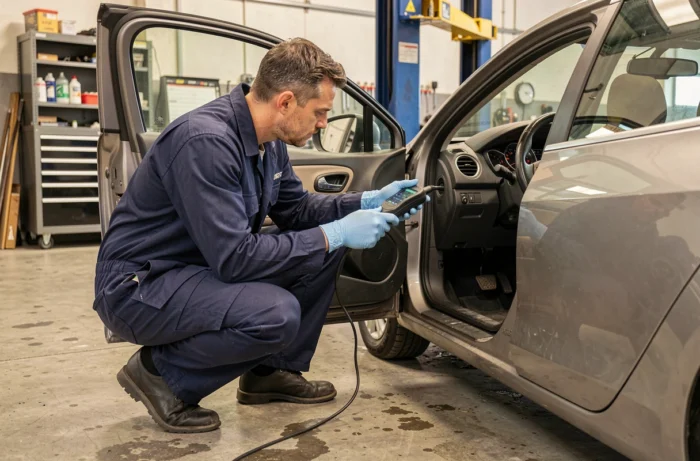
The temperature sensor sends information to the engine control unit. If it sends an incorrect reading, the dashboard displays a status that does not reflect reality. The engine may be at the correct temperature even though the blue warning light stays on. This type of fault can be diagnosed with an OBD reader, which compares the sensor reading with the actual coolant temperature.
Low coolant level
A low coolant level disrupts temperature regulation and can cause the sensor to give an inaccurate reading. Check the level with the engine cold and the vehicle on a level surface, making sure the coolant is between the MIN and MAX marks on the expansion tank. If the level drops again after topping it up, check for a leak or another fault in the system.
The color of the coolant alone cannot confirm whether it is compatible with the vehicle. Refer to the manufacturer’s recommendations in the service booklet.
Blue warning light, red warning light: don’t react to them the same way
The difference between the two colors dramatically changes the level of urgency. A blue temperature warning light does not mean you need to stop immediately. A red temperature warning light, however, indicates overheating that can damage the engine within minutes.
- Blue warning light: the engine is cold or is not warming up enough. You can keep driving, but have it checked if the light does not go out after around ten minutes of normal driving.
- Red warning light or STOP message: stop the vehicle as soon as it is safe to do so. Do not try to open the expansion tank while the engine is hot; the coolant is under pressure and poses a real risk of burns.
- Warning light changes from blue to red: this may indicate a problem with coolant circulation. The thermostat and water pump are among the first components to check.
Diagnosing the blue warning light on a Clio 4: where to start
Before booking an appointment with a mechanic, a few quick checks can help narrow down the cause.
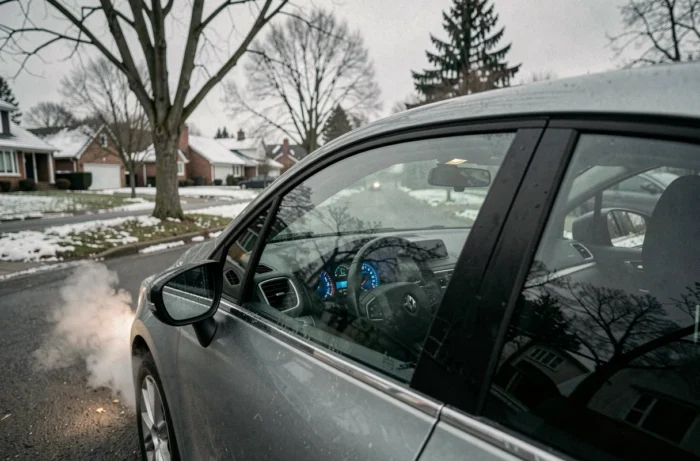
Look at the icon. A headlight with horizontal rays indicates the high beams: check the position of the stalk. A thermometer indicates engine temperature. If you are unsure, the vehicle’s owner’s manual shows each symbol and its exact meaning for your engine type (petrol or diesel).
Note how long the light stays on. A blue temperature warning light that goes out after a few minutes of driving is normal. If it stays on for more than ten to fifteen minutes of city driving, or never goes out on the highway, have the vehicle checked at a repair shop.
Check the cabin heater. If the air remains lukewarm even with the fan set to maximum, the thermostat is the most likely cause. An engine that stays too cold uses more fuel and wears out prematurely because the air-fuel mixture is not optimized for normal combustion.
Finally, a diagnostic scan with an OBD reader can retrieve any fault codes stored by the engine control unit. A code related to the temperature sensor or thermostat confirms which part needs replacing without exploratory disassembly.
Preventive maintenance for the Renault Clio 4 cooling system
The cooling system does not need frequent attention, but a few regular checks can help prevent problems indicated by the blue warning light.
- Check the coolant level at the start of each season, with the engine cold, and make sure it is within the marks on the expansion tank.
- Have the coolant replaced at the intervals specified in the Renault service booklet, as its anti-corrosion properties deteriorate over time.
- Inspect the hoses and connections for signs of leaks, white crystalline deposits, or seepage around the clamps.
The thermostat and temperature sensor are not typical wear-and-tear parts, but replacing them is common once the vehicle has covered a certain mileage. A mechanic can test them during a routine service at little or no extra cost.
A blue warning light on the Clio 4 is neither a reason to panic nor something to ignore. Identifying the icon, noting how long it stays on, and checking the cabin heater are usually enough to tell normal operation from the start of a fault. If you are still unsure, a fault-code scan can provide an answer in just a few minutes.