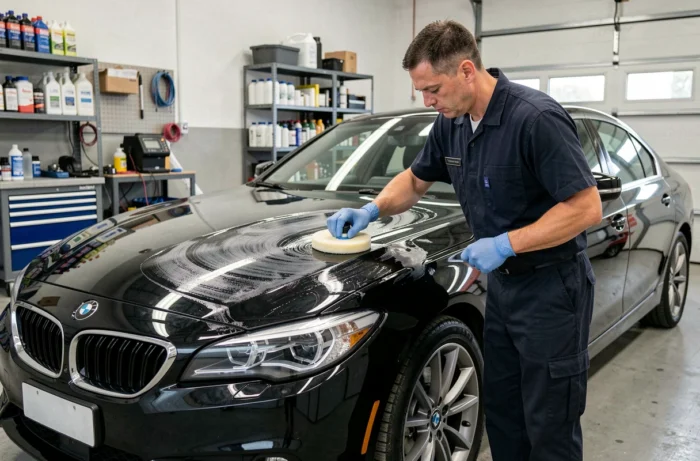
Dull paintwork, seats that have lost their original color, a lingering smell in the cabin: these signs appear gradually, often without you noticing. Professional car cleaning is about more than just hosing down a vehicle. It involves carefully assessing each surface, applying the right treatment and, often overlooked, managing wastewater in a controlled way—something a home car wash cannot guarantee.
Assessing the clear coat before cleaning the bodywork
Have you ever noticed that two cars of the same age can look very different? The difference often comes down to the condition of the clear coat, the thin transparent layer that protects the paint.
A professional starts by assessing this layer. There are three possible scenarios: the vehicle simply needs a thorough clean, it needs minor correction to remove fine scratches, or it requires more extensive correction to address pronounced defects. Polishing without first assessing the clear coat can thin it unnecessarily.
This diagnostic step explains why a detailing center does not offer a single flat-rate package. The treatment varies depending on the remaining clear coat thickness, the type of paint and the vehicle’s exposure to the elements. A professional trained in automotive detailing may also hold certifications registered in France Compétences’ Répertoire spécifique, such as references RS7606 or RS7091, which attest to skills in cosmetic car washing and polishing. This is a verifiable criterion for comparing providers, beyond before-and-after photos.
Specialist centers offer this type of assessment and comprehensive care, including https://www.cleanauto-metz.com, which works on every surface of the vehicle.
Professional car wash or washing at home: the wastewater question
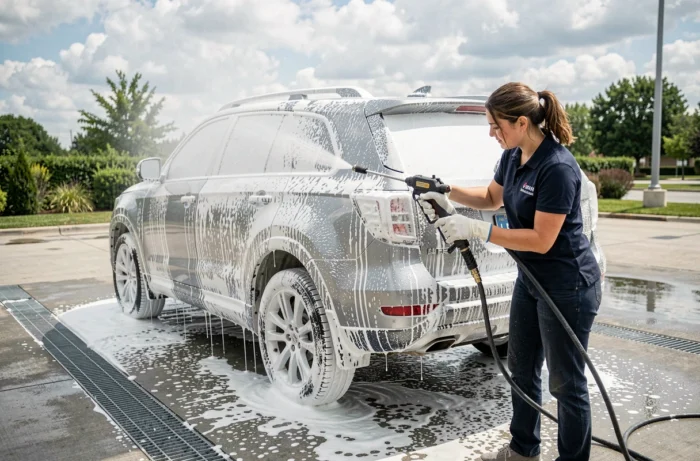
Washing your car in the driveway seems convenient and inexpensive. The results may even look satisfactory. But this raises an issue that is rarely discussed: where does the wash water go?
What car wash wastewater contains
Water running off a car’s bodywork carries residues of hydrocarbons, brake pad particles, traces of heavy metals and surfactants from cleaning products. At home, this water flows into street drains and then into the stormwater system, often without any treatment.
In most municipalities, stormwater does not pass through a wastewater treatment plant. It flows directly into waterways or groundwater.
Regulations governing professional centers
Car wash facilities covered by ICPE category 2560 are subject to the order of December 14, 2013. This text prohibits the direct or indirect discharge of effluent into groundwater. It requires the collection and treatment of water that may be contaminated.
Professional centers therefore have settling tanks, oil separators and sometimes closed-loop recycling systems. Professional cleaning treats wastewater before it is discharged, unlike washing with a garden hose.
Local water restrictions and washing at home
During periods of drought, prefectural orders may prohibit private individuals from washing their vehicles. These restrictions sometimes also apply to car washes, including those equipped with recycling systems. A parliamentary question raised in November 2026 by MP Louise Morel highlighted this issue: water-efficient equipment is sometimes subject to the same bans as conventional facilities, even though their performance differs considerably.
Choosing a professional center also means leaving this regulatory burden to an operator who adapts its operations to the restrictions in force.
Professional interior cleaning: what consumer products can’t do
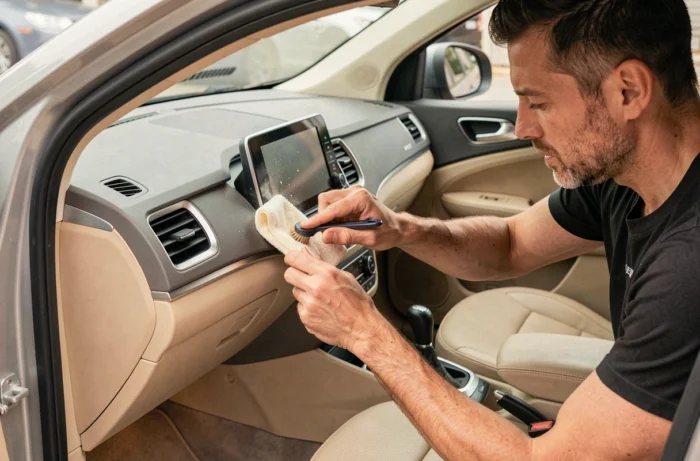
A vehicle’s interior accumulates invisible pollutants: allergens, bacteria and volatile organic compounds released by plastics heated by the sun. A household vacuum cleaner and a scented spray only address the surface of the problem.
A detailing professional uses specialized tools and methods:
- Hot water extraction injects a cleaning solution into seat fabric and carpeting, then immediately vacuums it up along with the dissolved dirt. The result: the fabric regains its original color without becoming soaked.
- High-temperature steam cleaning eliminates bacteria and dust mites from fabric, leather and plastic surfaces without harsh chemicals.
- Leather treatment involves deep cleaning followed by rehydration with a balm suited to the type of tanning. Untreated leather can crack within a few years.
These techniques are not interchangeable. The right choice depends on the material, the level of soiling and how long the stains have been there.
Protecting the bodywork after cleaning: wax, ceramic coating or PPF film
Cleaning without protecting the surface means starting over again within a few weeks. The protection applied after cleaning determines how long the results last.
Wax delivers an immediate glossy finish. Depending on exposure, it lasts from a few weeks to two months. It is suitable for regular maintenance between visits to a detailing center.
A ceramic coating creates a durable hydrophobic layer on the clear coat. Water beads on the surface and carries dirt away. Ceramic protection reduces how often the vehicle needs washing. Applying it requires meticulous preparation of the clear coat, which is why it remains a professional service.
PPF (Paint Protection Film) is a transparent film applied to areas exposed to impacts: the hood, bumpers and rocker panels. It absorbs stone chips and fine scratches without altering the appearance of the paint. It costs more, but physically protects the surface.
The choice between these protection options depends on your budget and how you use the vehicle. A vehicle that racks up a lot of highway miles benefits more from PPF on the hood than an urban car parked in an underground garage.
Professional cleaning is about more than visual results. It combines a technical assessment, regulatory wastewater management and protection tailored to each vehicle. This combination is what sets long-lasting care apart from a simple cosmetic wash.