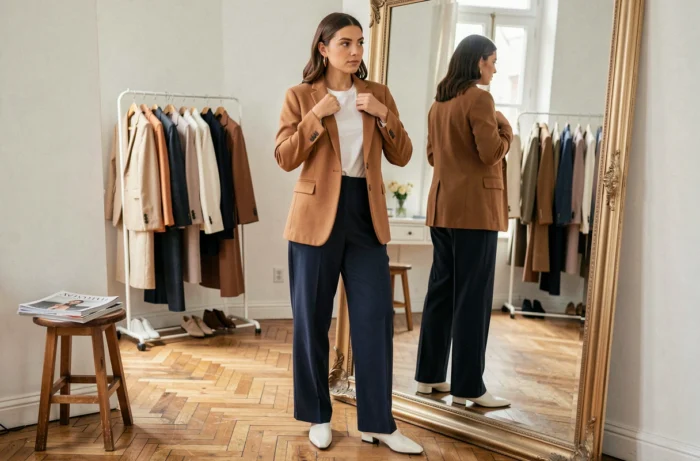
France’s textile market is no longer defined by two seasons a year. Trend cycles have sped up, shopping channels have multiplied, and second-hand fashion has grown in volume, according to Refashion’s report published in September 2026. In this context, developing a personal style is less about following every micro-trend and more about knowing which pieces to keep, which to add, and how to put them together for the long term.
Build a sustainable wardrobe before following fashion trends
Most style guides start with body shape or colors. The real starting point lies elsewhere: how long the pieces you already own will last. A wardrobe made up of clothes designed to stand the test of time reduces the need to replace them and provides a stable foundation for adding occasional trends.
European regulations currently being implemented are pushing brands to be more transparent about how easy textiles are to repair and how long they last. For anyone looking to develop a personal style, this has a practical consequence: choosing well-made, repairable clothes helps your wardrobe last for years.
Before buying a trendy piece, check whether it can be paired with at least three outfits already in your wardrobe. If not, it may end up unworn within a few months. Browse fashion on Indiz to find current pieces while keeping this compatibility in mind.
Current fashion trends: what’s worth adding to your wardrobe
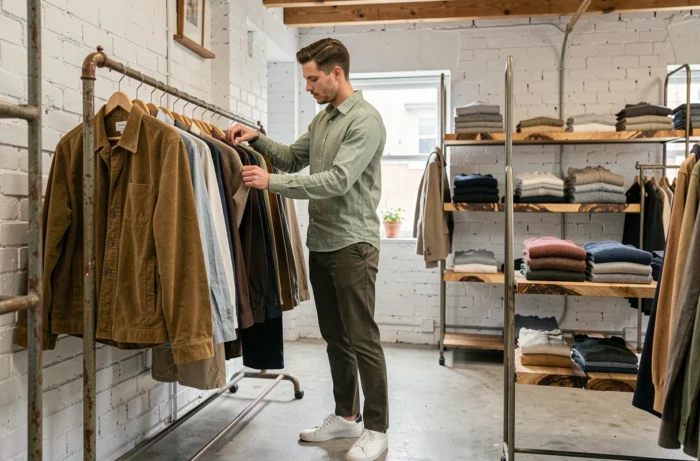
Not all trends have the same staying power. Some reflect a broader shift, such as the return of raw materials or looser cuts, while others disappear within weeks, like a very specific color or a print that goes viral on social media.
Knowing how to tell a lasting trend from a passing fad is the most useful skill for creating a cohesive style. A lasting trend changes cuts or the way clothes are worn over several seasons. A passing fad often involves just one visual detail.
Use three practical criteria to filter trends
- How well it works with your usual color palette: a trendy shade that clashes with the rest of your wardrobe may force you to buy other pieces to wear it
- How well it fits your everyday life: a distinctive cut, such as oversized shoulders or ultra-wide-leg trousers, works if your lifestyle allows for it, but not if you need versatile outfits for both the office and outdoors
- How well it’s made: a trendy piece in fragile fabric won’t last the season, which is as good as throwing money away
Applying these three filters can significantly reduce impulse purchases. You can still embrace trends, but only those that build on your style rather than fragment it.
Second-hand fashion and personal style: an underrated tool
In France, purchases of second-hand textiles and footwear increased in 2025. This reflects a shift in habits that goes beyond simply looking for lower prices.
Second-hand shopping gives you access to pieces that aren’t available in stores today: cuts from previous seasons, fabrics brands no longer make, and designer pieces at reduced prices. That’s a real advantage when developing a personal look: you can wear clothes that few people around you own.
Where you shop matters. In 2025, sales volumes grew faster for brands selling their own second-hand items than for peer-to-peer platforms. Comparing in-store and online second-hand options broadens your choices beyond the best-known apps. Brands that resell their own pre-owned pieces generally guarantee authenticity and better garment condition.
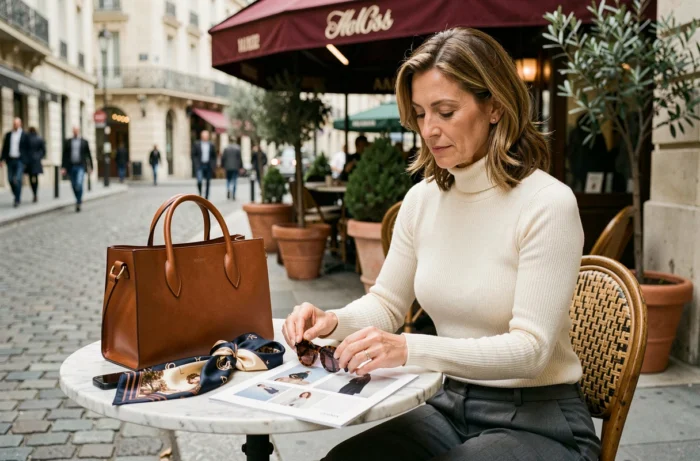
Work a vintage piece into a contemporary outfit
The classic second-hand shopping trap is ending up with a mismatched collection and no unifying thread. To avoid this, every vintage piece should meet a specific need in your wardrobe: a structured blazer you’re missing, a color absent from your outfits, or an accessory that ties several looks together.
A well-chosen second-hand garment anchors your style better than a trendy new piece because thousands of other people won’t be wearing it in the same season.
Colors and accessories: two ways to elevate your personal style
Color is the first visual cue in an outfit. Before noticing shapes or fabrics, the eye takes in the palette. Start with three or four neutral colors—the ones you naturally wear most often—and add one or two accent shades to create an instant sense of cohesion.
Accessories play a different role. The same outfit can look completely different depending on the belt, bag, or shoes you pair with it. Investing in well-made accessories rather than additional clothes is often a better way to get more versatility from your wardrobe.
- A pair of shoes in a neutral color with a textured finish, such as grained leather or suede, adds personality without limiting your outfit options
- A bag sized for how you actually use it—not too small for everyday essentials or too large for things you don’t need—helps avoid accumulating multiple styles
- A watch or piece of jewelry you wear regularly becomes a stronger signature than any trendy clothing item
Accessories turn a basic outfit into a personal look without a major investment. They’re the most direct way to refresh your style when your budget doesn’t stretch to a whole new wardrobe.
Creating a style that feels like you isn’t about how many pieces you buy or methodically following every trend. It’s about editing: keeping what works, adding what you genuinely need, and accepting that some trends simply aren’t for you.
European regulations on textile durability support this shift by making the true quality of clothes on offer increasingly visible. The most sustainable style is one that lasts through the seasons without needing to be justified.