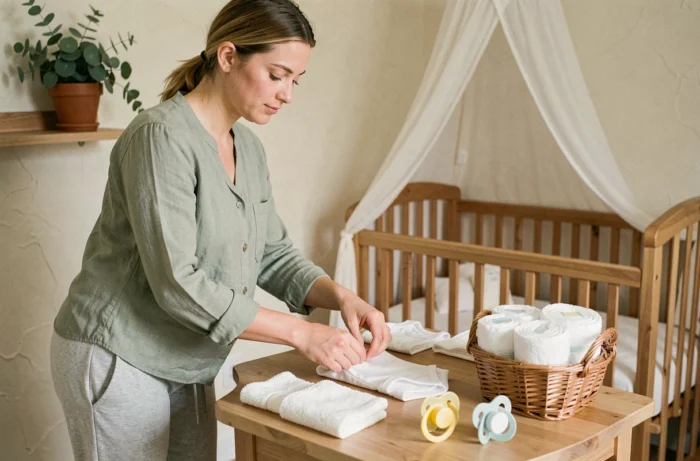
A crib, a stroller, bodysuits, a wardrobe full of diapers: the classic newborn shopping list is everywhere. It’s useful, but it often leaves out two things that are key to making the first few weeks less stressful: preventive healthcare for the baby and practical arrangements for the second parent at home. Preparing for your baby’s arrival also means planning for these things before the birth.
Vaccinations during pregnancy: protecting your newborn from birth
Before you even set foot in a baby store, an appointment with your midwife or gynecologist is a good opportunity to review your vaccinations. This topic rarely comes up on shopping lists, even though it directly affects your baby’s protection during the first few weeks of life.
The CNGOF notes that whooping cough vaccination is recommended during every pregnancy. The aim is to pass antibodies to the fetus to protect the baby before they receive their own vaccines. The timing of the vaccination affects how effectively these antibodies are transferred, so it’s worth discussing early in your prenatal care.
Another point to discuss is protection against RSV (respiratory syncytial virus), which causes bronchiolitis. Santé publique France highlights the importance of preventive measures such as airing rooms regularly, washing hands and avoiding contact with people who are ill. A gap must also be left between RSV and whooping cough vaccinations. These are all details to clarify with the healthcare professional overseeing your pregnancy, rather than discovering them after you return from the maternity ward.
On the Bébé Tout Neuf website, the sections dedicated to the first few months remind parents that equipment can never replace these basic health precautions.

Newborn sleep and safety: choosing the right bed
Are you deciding between a bassinet, a cot or a bedside crib? The answer depends on your space and nighttime habits, but one requirement is non-negotiable: the mattress must be firm and fit the bed perfectly.
A mattress that’s too small leaves a gap where your baby’s face could become trapped. A mattress that’s too soft increases the risk of suffocation. These are the two things to check first, before considering the color of the cot bumper (which safe-sleep guidelines advise against).
Room temperature and environment
The baby’s room should ideally be kept between 18 and 20 °C. A simple room thermometer is all you need to monitor the temperature. If the air is dry (because of electric heating or a mountain climate), a humidifier can help prevent your baby’s airways from drying out.
Airing the room every day, even in winter, also helps reduce indoor pollutants and viruses. This habit is in line with Santé publique France recommendations for preventing winter respiratory infections.
Newborn clothes and care: avoid buying too much
Baby’s first clothes don’t get much wear, but they get dirty quickly. As a result, many parents end up with a pile of newborn-size clothes that will only be used for a few days.
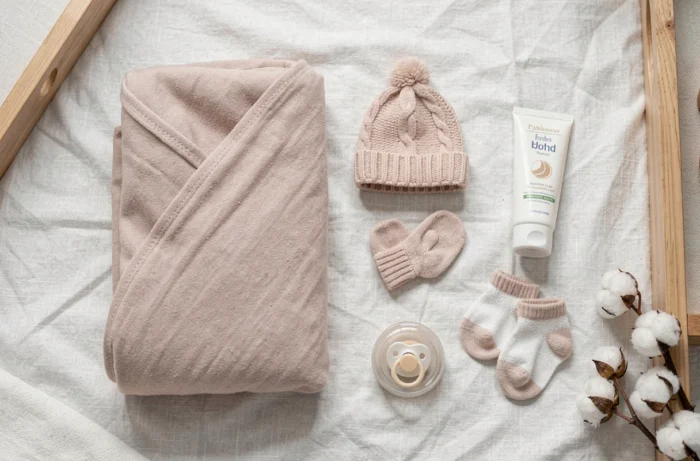
- Plan for five to seven newborn-size bodysuits and the same number in 1-month size, as growth is rapid and unpredictable in the first few weeks.
- Choose snap-fastening pajamas rather than button-up ones to make nighttime changes easier when fatigue sets in.
- Keep two or three cotton cardigans and a season-appropriate sleep sack on hand; these cover the essentials for the first few weeks.
When it comes to care, a newborn needs very few products: a gentle cleansing gel, liniment or water-based wipes, a bath thermometer and hooded towels. Specialty creams, massage oils and elaborate bath accessories can wait until you know what your baby actually needs.
Second parent’s leave: plan your time at home before the birth
Having help available when you return from the maternity ward can make a huge difference to those first few weeks. Paternity and childcare leave allows the second parent to be there, but the paperwork needs to be planned in advance.
The employer must be notified in advance of the expected leave dates. The additional birth leave, which can be taken for one or two months after existing leave, also needs to be planned with your employer. Leaving it until the last minute makes things more difficult for everyone.
Why discuss it as early as the second trimester
Talking about it early gives you time to set the dates, check the terms for maintaining health and income protection coverage during the absence, and make sure work responsibilities are covered. This administrative side may be less appealing than a baby-shopping trip, but it determines whether the second parent will be available during the most demanding period.
Newborn feeding: prepare without overcomplicating things
Whether you plan to breastfeed or bottle-feed, it’s best to decide before the birth in consultation with your healthcare professional. Here’s what that means in practical terms:
- For breastfeeding: two or three nursing bras, breast pads and, if needed, a breast pump (often prescribed after the birth, not before).
- For bottle-feeding: a set of bottles, a bottle brush and first infant formula recommended by your pediatrician or midwife.
- For both: four to six cotton muslin cloths, which can be used as bibs, shoulder cloths or lightweight blankets.
Feeding equipment can be adjusted after the birth, once your baby’s routine is established. Buying only the essentials before delivery and adding to them as needed helps avoid unnecessary spending and clutter.
Preparing for a baby’s arrival is about more than ticking items off a shopping list. Maternal vaccinations, safe sleep arrangements, leave for the second parent and thoughtful choices about equipment provide a stronger foundation than a perfectly decorated nursery. Everything else can be adjusted week by week as you get to know your newborn.