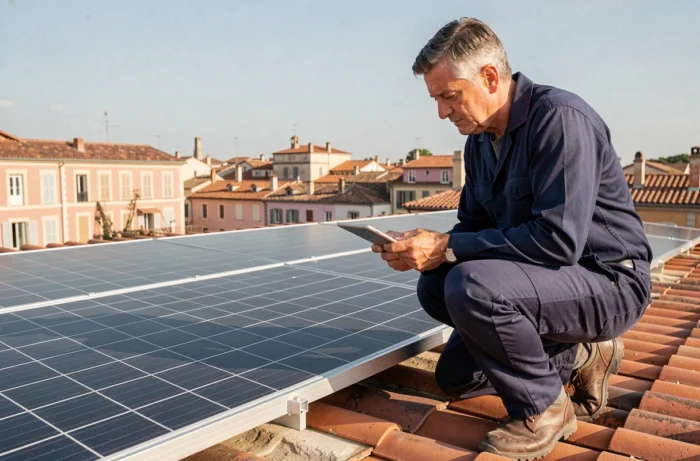
Solar energy in Toulouse benefits from some of the highest sunshine levels in France, with more than 2,000 hours of sunshine per year. Installing photovoltaic panels on a poorly insulated roof or without considering how electricity is used is like filling a leaky bucket. Improving a home’s energy efficiency means treating the building envelope, system sizing and energy use management as parts of a coherent whole.
Insulation and the building envelope: a prerequisite before installing solar panels
Competitors talk about sunshine, profitability and incentives. Few address the real starting point: the home’s thermal condition. In Toulouse, renovations at the Enzo Godeas residence, completed in 2021, reduced energy consumption by 146 kWhEP/m².an by combining insulation, equipment upgrades and solar panels for the common areas.
The lesson is clear. An energy audit (or at least a recent EPC) identifies the main sources of heat loss: the roof, walls and windows. Addressing these weaknesses before sizing a photovoltaic system helps avoid installing more kWp capacity than necessary—and overpaying upfront.
When the building envelope is in good condition, every kilowatt-hour generated by the panels covers a larger share of actual energy needs. Self-consumption rises naturally because the home needs less energy to maintain a comfortable temperature. The first step to optimizing solar energy in Toulouse is upgrading the building itself.

Photovoltaic system sizing for a home in Toulouse
A photovoltaic system is defined by its peak capacity in kWp, which depends on the available roof area, its orientation and its pitch. In Toulouse, a south-facing roof with a pitch of around 25 to 30 degrees delivers the best annual output.
Expected output and local factors
According to data from installers operating in the region, a 3 kWp system generates around 3,900 kWh in its first year under suitable conditions. Actual output depends on practical factors such as shade from a tree or neighboring building, clean modules and high summer temperatures (solar cells become less efficient in intense heat).
In Toulouse, hot summers can reduce output at midday. Solar energy remains plentiful over the course of the year, but peak generation does not always coincide with peak household consumption, making energy management important.
Choosing between photovoltaic and hybrid panels
Hybrid solar panels generate both electricity and heat (for domestic hot water). For a home with high hot water demand, this technology increases the overall output per square meter of roof space. The higher purchase price can be worthwhile when the roof configuration limits the available area.
- Standard photovoltaic panels: generate electricity only, lower cost per kWp, suitable for well-oriented roofs with enough space
- Hybrid panels (such as DualSun): generate both electricity and heat, a good option when roof space is limited or the hot water tank uses a lot of energy
- Solar thermal panels only: generate hot water but no electricity, and are being installed less often as hybrid systems gain ground
Managing solar self-consumption: the overlooked opportunity
Generating solar electricity is not enough if it is fed into the grid while the household uses power in the evening. Shifting flexible energy use to hours when the panels are generating electricity can radically change the financial equation.
In practice, scheduling the water heater, washing machine or dishwasher to run in the middle of the day makes it possible to use the electricity generated directly. Some home energy management systems automate this shift based on the panels’ real-time output.
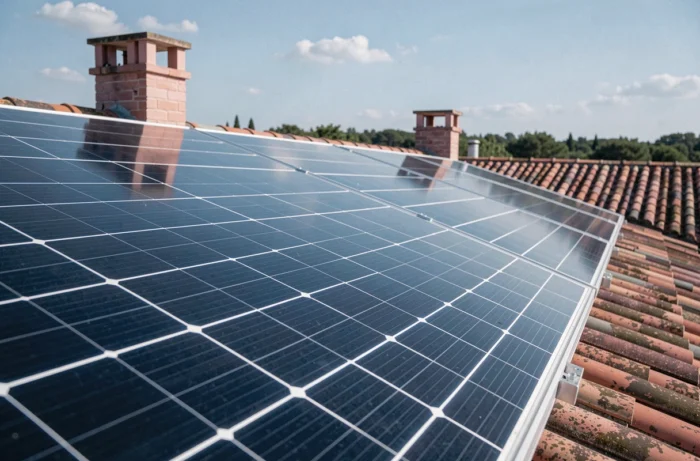
Self-consumption or selling surplus electricity in Toulouse
The financial model for a solar installation depends on whether you choose self-consumption with surplus sales or sell all the electricity generated. For a detached home in Toulouse, partial self-consumption is the most common approach: use the electricity you generate first, then sell any surplus to EDF OA.
Purchase rules have changed recently, and the applicable rate depends on the date the grid connection application is submitted. Checking the rules in force when you file your application helps avoid unpleasant surprises about the expected payback period.
Financial incentives for solar in Haute-Garonne: what is still available
Incentives change regularly, and some have been reduced or discontinued in recent years. Two national schemes are still available for residential projects:
- The self-consumption bonus, paid over the first few years after the system is commissioned, with the amount depending on installed capacity in kWp
- The obligation for EDF OA to purchase surplus electricity at a rate set when the system is connected to the grid
- Reduced VAT for small-capacity systems installed in homes more than two years old
Local incentives from Toulouse Métropole have varied from year to year. The most reliable approach before signing a quote is to check availability directly with the local authority or your local France Rénov’ advice center.
Combining insulation and solar can also make a project eligible for comprehensive renovation schemes (MaPrimeRénov’ supported renovation pathway), provided it includes several types of work. A solar project included in a comprehensive energy renovation can qualify for better funding than a standalone installation.
A home’s energy efficiency in Toulouse is not simply a matter of how many panels are on the roof. It comes from following the right sequence: reduce energy needs through insulation, size solar generation to match actual consumption, then manage energy use to increase self-consumption. This sequence determines the true profitability of a photovoltaic project far more than the sunshine alone in the Pink City.