In France, renovating your home is no longer just an aesthetic choice. Since January 1, 2025, properties rated G on the DPE energy performance certificate can no longer be offered for rent. The ban will extend to F-rated properties in 2028, then to E-rated properties in 2034.
This regulatory timetable is prompting many homeowners to rethink their properties, sometimes at short notice. With energy-efficiency requirements, more targeted subsidies and a desire to modernize their living spaces all in the mix, interior renovation sits at the crossroads of several priorities that need to be untangled before any work begins.
Interior renovation and energy-efficiency requirements: two connected projects
Many renovation projects start with a desire for a decorative change: repainting a living room, replacing the flooring or modernizing a kitchen. These upgrades are still worthwhile, but they should be considered alongside the property’s energy performance.
QUALITEL points out that a heating system must be sized according to the insulation, the volume to be heated, how the space is used and the ventilation. In other words, insulation, heating and ventilation are inseparable. Installing a heat pump without first improving wall insulation means heating a space that is losing heat. Conversely, adding insulation without adapting the ventilation can lead to damp and condensation problems.
For a landlord, overlooking this interdependence can have direct consequences: a poorly renovated property may retain a low DPE rating and become ineligible for rental in the years ahead.
Online resources such as Agorénovation on Cécile Bricole can help you identify the work to consider based on your property’s layout. The key is not to separate the aesthetic aspects from the technical ones, especially when working with a limited budget.
MaPrimeRénov’ and renovation grants: what has changed
Public renovation grants have been refocused on more comprehensive projects. MaPrimeRénov’ now prioritizes major renovations over individual upgrades. Replacing a single window or adding a small amount of insulation is no longer automatically eligible under the same conditions as before.
Your choice of heating system can also affect your eligibility for assistance. A homeowner who wants to keep a conventional gas boiler will not have access to the same schemes as someone who chooses a heat pump or a renewable energy system.
For apartment owners, things are even more complicated. An individual owner cannot decide on work affecting common areas alone. If the owners’ association votes against external insulation or replacing a communal heating system, the options available to an individual owner are considerably reduced. TF1 Info recommends having the vote and refusal recorded in the meeting minutes, which may pave the way for exemptions that are still under consideration as part of the legislative process.
Before starting any interior decorating work, check whether you qualify for grants and make sure you understand the current requirements. This can help you avoid missing out on funding that may cover a significant share of the total budget.
Interior renovation ideas, room by room
Once the technical requirements are clear, aesthetic choices can take center stage. Renovating in style does not mean tearing everything out: a few targeted upgrades can completely transform a space.
Living room and main living area
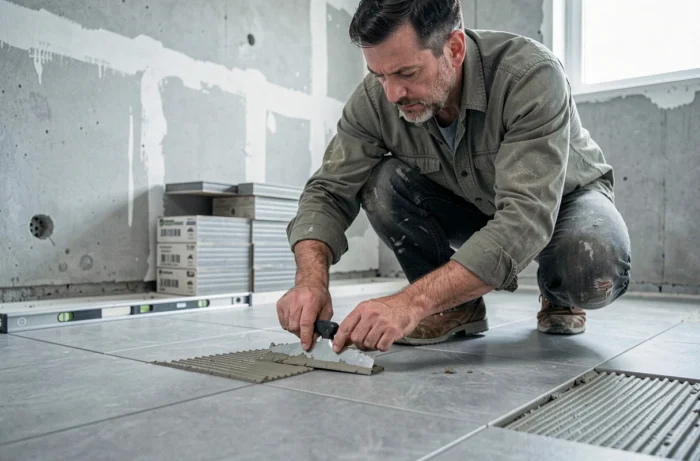
Flooring is the most noticeable way to transform a living room. Wood-effect ceramic flooring, for example, combines the visual warmth of natural wood with the durability of porcelain stoneware. This type of flooring is easy to maintain and more moisture-resistant than solid wood flooring.
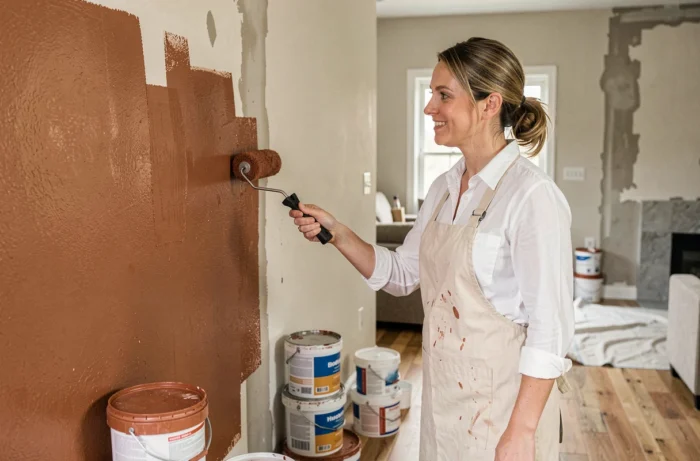
Paint is still the least expensive way to change the feel of a room. A feature wall in a rich shade, paired with neutral colors on the other walls, is enough to visually reshape a space without major work.
Kitchen and bathroom
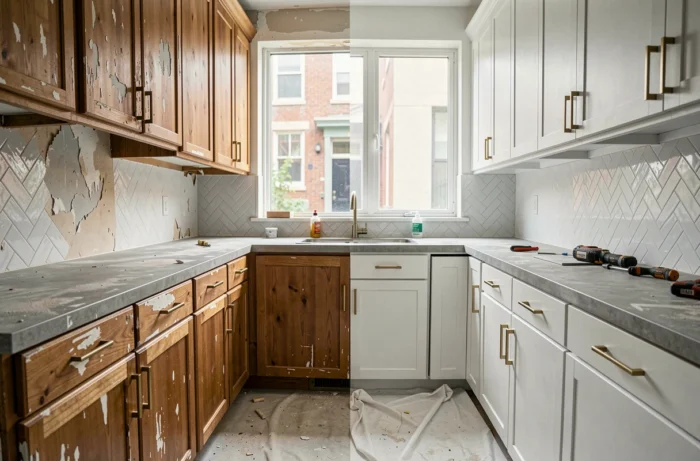
In the kitchen, replacing the backsplash offers a big transformation for a relatively small investment. Porcelain stoneware backsplashes are heat-resistant and easy to clean, while adding a contemporary finish.
In the bathroom, mosaic tiles in a shower alcove or as a wall feature can create anything from a zen-inspired look to a bold graphic effect, depending on the colors you choose. Natural or pastel shades create a calming feel, while striking color combinations add character to a small space.
Bedroom and secondary spaces
The bedroom is well suited to simple but effective upgrades:
- A feature wall behind the bed, finished with textured wallpaper or wooden slats, can change the room’s character without altering the rest
- Replacing light fixtures with dimmable models improves visual comfort and lets you create different moods
- Adding built-in storage (sliding-door closets, wall niches) frees up floor space and makes the room feel larger
Interior renovation budget: balancing decor and energy performance
It can be tempting to spend the entire budget on visible decorative upgrades. Balancing aesthetics with a property’s energy performance affects its value over the medium term. A freshly redecorated but poorly insulated home will become less attractive as DPE requirements become stricter.
A few principles can help you strike the right balance:
- Start with the building envelope (insulation, windows, ventilation) before moving on to decorative finishes
- Group projects together to take a more comprehensive, technically coherent approach that may also qualify for better financial assistance
- Set aside part of the budget for structural surprises, which are common in older homes (hidden damp, outdated wiring, aging pipes)
- Choose durable materials for high-use areas (flooring, kitchen countertops), even if that means saving on elements that are easier to replace
A consistently renovated property is easier to rent or sell than one where only the visible surfaces have been updated. Mandatory inspections are making this increasingly clear to buyers and tenants.
Interior renovation involves decisions that go beyond style. The regulatory timetable for energy-inefficient homes, the shift in renovation grants and the close relationship between insulation and decor all call for an approach where every euro invested improves both immediate comfort and the property’s long-term value.